
The Morning Brief


Why we Launched a Media Startup?

In a world of corporate boardrooms and bottom lines, most organizations exist to generate profit. But BLK.AM Media Group exists for a different reason: We believe strong communities require strong local news, and Lima deserves a playbook for what is happening in its own streets.
The "Last to Know" Tax Growing up, I didn’t have the "playbook." Like many of us, I saw my neighborhood, but the gears behind the curtain were a mystery. I didn’t understand how a City Council vote could change my street, or why decisions made halfway across the country could shutter a factory in our backyard.
We were taught to work hard, but not how the systems of power move. Often, we find out about life-changing decisions only after the gavel has dropped.
That is the "Last to Know" tax. For our community, it is getting more expensive every day.
The Big Picture This isn't an accident. Our local news ecosystem is in a state of collapse.
- The Loss: The U.S. has lost 2,500 local papers in two decades.
- The Grip: Six corporations now control 90% of the media we consume.
- The Lima Reality: Our legacy paper isn’t even printed here. It’s a "regional blend" owned by a conglomerate in Texas. To them, our neighborhoods are just cells on a spreadsheet.
Why BLK.AM is Different We aren't here to be another detached news outlet. We are building a Paper of Use—a tool designed for action.
- Smart & Fast: We give you the "cheat codes" to the 419.
- Active Journalism: If we report on the wealth gap, we host "Money School." If we report on health disparities, we host Wellness Days. * No Shareholders: We don't answer to distant owners. We answer to neighbors in Lima.
The Goal We believe people stop showing up to the polls or school boards when the news makes them feel helpless. We are here to make you feel powerful.
To keep this mission independent and active in the streets, we need you in the fold.
THE LAUNCH PLAN
- Subscribe: Get the Morning Brief for the facts, the culture, and the playbook delivered straight to your inbox.
- Support: We are a community-supported model. Your monthly contribution ensures our news—and our community work—remains free of corporate filters.
Stay caught up. Get ahead. Act on it.
[Sign Up & Support BLK.AM Media Group Here]
Let’s build something for us.
Nate King Editor, BLK.AM Media Group
Good morning. It’s Wednesday, April 8. Cable Road issue moved to committee. Early Voting is underway. Now, let’s get you caught up with Lima in just a few minutes with the following news stories.
Today's newsletter is a 3.5-minute read.
1 big thing: Cable Road issue moved to committee
The debate over the North Cable Road redesign is far from over, as Lima City Council voted last night to refer the matter for deeper legal review.
- The news: At Monday's meeting, Council President Jamie Dixon moved to refer Ordinance 83-26—which would have rescinded the original property acquisition plan—to the Committee of the Whole.
- Why it matters: Dixon noted the need for "legal advice" regarding various issues and the possibility of "imminent litigation" depending on how the council eventually votes. This pause allows members to review the impact of the certified referendum petition.
- The procedural pivot: Because the council did not repeal the ordinance last night, the move to committee delays a final decision on whether the issue will head to a public ballot for voters this fall.
2 SAVE America Act & voter registration drives
A top legislative priority for President Trump, the SAVE America Act, is creating ripples in how community organizations approach voter engagement.
- The friction: Critics argue the bill would effectively ban national voter registration drives. Groups like NonprofitVOTE suggest that community-based organizations and campus groups would be functionally unable to assist voters due to strict in-person proof-of-citizenship requirements.
- The local impact: In Lima, this would mean the end of easy online or mail-in registration updates. Residents would likely be required to visit the Allen County Board of Elections in person with a birth certificate or passport to register.
- The GOP view: Proponents, including Sen. Chuck Grassley, argue the bill "preserves the integrity of every vote" and provides states flexibility in how citizenship is proven.
3 Budget, water, and aquatic park fees approved
Council moved a heavy block of business last night, clearing the path for several 2026 city priorities:
- The 2026 Budget: Ordinance 33-26 passed its first reading with a unanimous 8–0 vote, establishing the city's financial roadmap for the year.
- Utilities: A contract with CDM Smith Inc. was approved for comprehensive water modeling and system analysis (Ordinance 24-26).
- Summer Fun: Admission and program rates for the Lima Community Aquatic Park were set for the 2026 season. Councilors emphasized keeping these rates affordable for local families.
4 Around the 419
- Parks: Lima is seeking state funding for multiple projects, including a skate park at Schoonover Park and a permanent concession facility at the downtown amphitheater.
- Grants: Applications for the 2026 Annual Action Plan (CDBG/HOME funds) are officially open. A briefing for interested nonprofits is scheduled for April 15 at 5:30 PM in Council Chambers.
- Business: The city has been cleared to apply for the Procter & Gamble US Large Site Community Grant to bolster local recreation infrastructure.
Homeownership Workshop- April 22nd
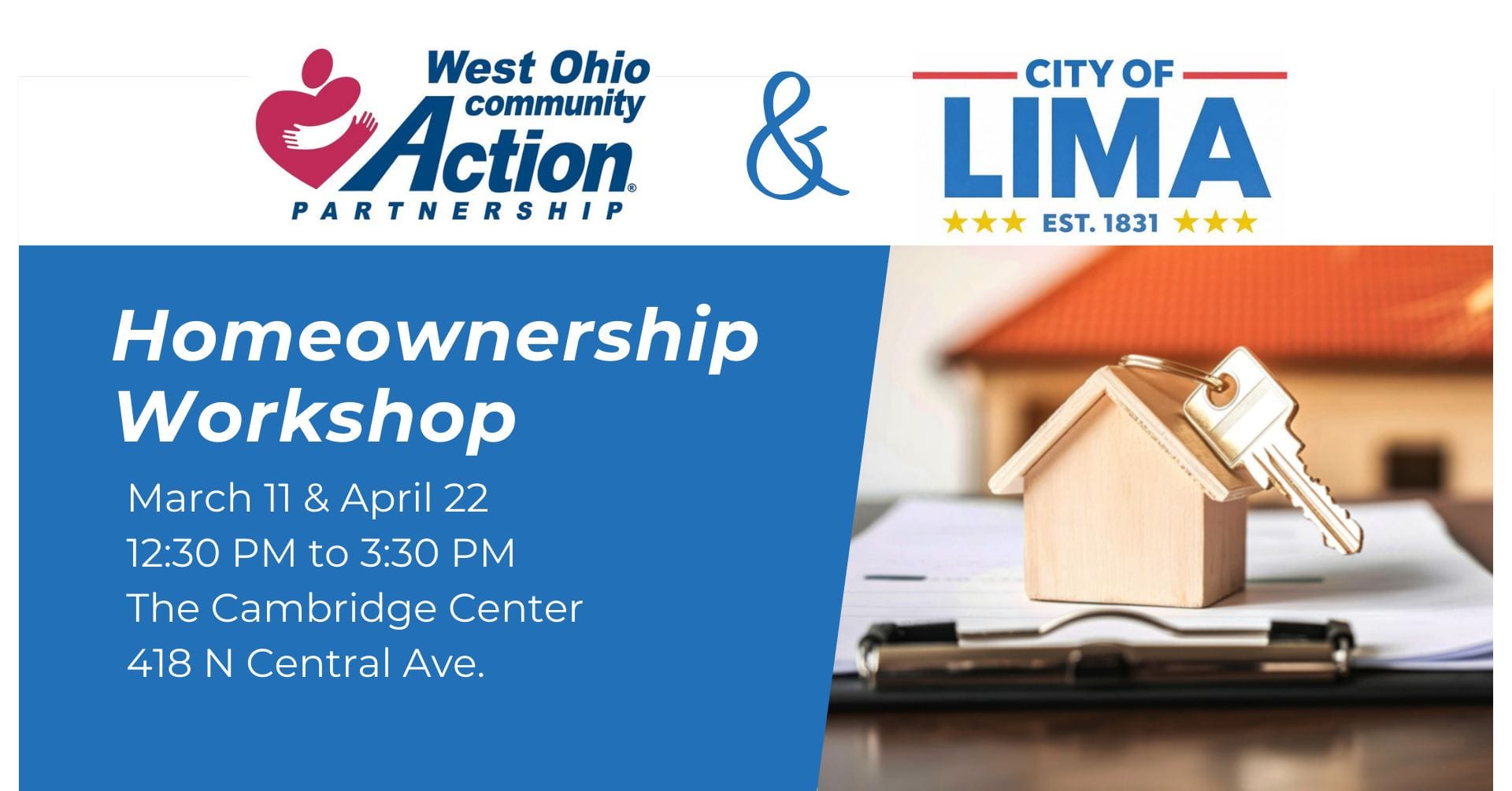
Invest in your future. This workshop is specifically designed for prospective homebuyers interested in purchasing a home within the City of Lima. Local lenders will be on hand to answer questions and provide direct guidance throughout the entire process.
📍 LOCATION The Cambridge Center 418 N Central Ave Lima, OH 45801
📅 WORKSHOP DATES & TIME MARCH 11 | APRIL 22 Time: 12:30 PM – 3:30 PM
📝 REGISTER TODAY Registration is required. Join local experts to learn about budgeting, credit, and financing options available to you.
Sign Up Today: • Register online: www.wocap.org • Register by phone: 419-227-2586
Presented in partnership with West Ohio Community Action Partnership (WOCAP).
🌟 Black Business of the Week
Plush Cookie Co.
There is nothing quite like a fresh, high-quality baked good to turn a regular morning into a great one. This week, we are shining a spotlight on Plush Cookie Co., a local favorite dedicated to spreading joy through their incredible signature cookies. Whether you are treating the office, grabbing a quick sweet treat for yourself, or looking for the perfect dessert for a family gathering, their creative recipes and attention to quality make them a must-visit in Lima.
📍 Where to find them:
1060 Bellefontaine Ave.
Lima, OH 45805
🔥 The Morning Brief Special
Mention The Morning Brief or blk.am at the counter this week to receive 15% off a half-dozen box of their signature cookies. It’s the perfect mid-week pick-me-up—grab a box, support local, and taste the difference.
Are you a Black business owner in Allen County with a special you want to feature? Reply to this email to be considered for next week's spotlight!
✊🏾 VENDOR CALL: Juneteenth Unity & Heritage Festival 2026 🎊

Vendor applications are officially open for the 2026 Juneteenth Unity & Heritage Festival. We are looking for the heartbeat of our community to join us in building a marketplace that reflects our culture, our freedom, and our future.
🎨 Who We’re Looking For- Creatives & Artisans: Jewelry, apparel, fine art, and handmade goods.
- Food Vendors: Bringing the soul and the spice to the festival.
- Small Businesses: Showcasing local services and entrepreneurship.
- Community Organizations: Providing resources and building unity.
Juneteenth is more than a festival—it’s an experience. Join a day filled with:
- Live Music & Powerful History
- Family-Focused Fun
- The Proposal: Acton plans to lead a push for a new redistricting reform amendment in 2027. She aims to replace the current commission of elected officials with an independent citizen panel.
- The 2024 Hangover: Acton called the defeat of the 2024 reform measure a result of "lawless" and "intentionally misleading" ballot language written by state Republicans.
- The Ticket: Running alongside Lt. Gov. candidate David Pepper, Acton is positioning redistricting as a way to "get good people back into office" by ending the era of hyper-partisan primaries.
- The Road Ahead: To get back on the ballot, her campaign will need to mobilize millions of dollars and hundreds of thousands of signatures—a tall order as she simultaneously faces off against Republican frontrunner Vivek Ramaswamy.
- The Death of the Independent: Since 1980, the market share for independent grocers has plummeted from 50% to just 25%. When these local stores died, "Big Box" chains took over, eventually realizing they didn't need to maintain neighborhood locations to capture local spending.
- The "Efficiency" Lie: For decades, the government stopped enforcing the Robinson-Patman Act—a law requiring suppliers to give the same deals to small stores as they do to giants like Walmart.
- The Result: Large chains used their size to force special deals, undercutting local shops until they went bust. For those in Lima without a car, this leaves only the "meager selection" of processed foods at the local dollar store.
- Weaponized Pricing: The report highlights a lawsuit where a major supplier allegedly punished a grocer serving low-income areas by forcing them to raise prices faster than their suburban competitors.
- The Squeeze: Suppliers like Tyson and PepsiCo have consolidated to match the power of giant retailers. This "double consolidation" drives prices higher for everyone, but smaller neighborhood retailers—who are often the only ones left in the urban core—get hit with the highest costs.
- The "Mushroom" Strategy: Formed 13 years ago to "move at the speed of business," JobsOhio is a private nonprofit that handles Ohio’s economic development. Because of its private status, it’s exempt from public records laws, leading critics to say the public is being kept in the dark and "fed manure."
- The $60K Ghost Podcast: While Black micro-entrepreneurs in Lima are told there’s "no capital available" for their startups, JobsOhio recently found $60,000 to sponsor a podcast with no listeners that was linked to a political insider’s romantic interest.
- Liquor-Funded, Equity-Starved: JobsOhio gets its hundreds of millions from the state’s high-proof liquor monopoly. While Black Ohioans spend a disproportionate amount on the spirits that fuel this fund, Black entrepreneurs in Lima are still hitting a wall when trying to access startup capital.
- The Audit Fight: Currently, JobsOhio hires its own private auditors, which keeps the State Auditor’s hands tied. Yost and a bipartisan group of lawmakers are pushing a new bill to force the agency to submit to a state audit every two years.
- Where are the Jobs? The agency claims it has created 250,000 jobs, but since the numbers are self-reported and not independently verified, skepticism is growing.
- The Big Question: As more "pay-to-play" allegations surface, Ohioans are left wondering: Should a private company have total, unchecked control over the public's liquor profits?
- Healthier Residents: Medically tailored meals are projected to save $23.7 billion in annual healthcare costs nationally by preventing hospitalizations.
- Stronger Farms: At least $5.6 billion in new revenue could flow directly to small and mid-sized family farms—the backbone of West Central Ohio.
- Local Wealth: Instead of healthcare dollars flowing to out-of-state pharmaceutical giants, that capital stays in Allen County, supporting local food hubs, processors, and growers.
- The Incident: While specifics regarding the location and motive have not been fully disclosed, reports confirm the rapper was targeted in an overnight shooting.
- Condition: Early updates indicate he is hospitalized; however, his current status and the severity of his injuries have not yet been made public.
- The Backdrop: This news follows a period of heightened visibility for the rapper, who has been active on the Florida circuit for both professional appearances and leisure.
- The Working Poor: A staggering 93.8% of Ohioans on Medicaid expansion are already working, in school, or acting as full-time caregivers.
- Self-Employment Squeeze: Entrepreneurs will be hit hardest. Because self-employment income is difficult to verify, between 30% and 73% of self-employed Medicaid recipients are projected to lose their insurance.
- The Red Tape Loop: The law requires eligibility to be re-proven every six months. For those with chronic illnesses or limited internet access, this creates a "bureaucratic trap" that can end coverage even if they still qualify.
- Small Business Impact: Nearly half of those losing coverage either work for or own small businesses that cannot afford private group plans.
- Health Gaps: Between 16% and 62% of people too ill to work are expected to lose coverage simply because "medical frailty" exemptions are notoriously difficult to verify through state data.

Amy Acton revives the redistricting fight
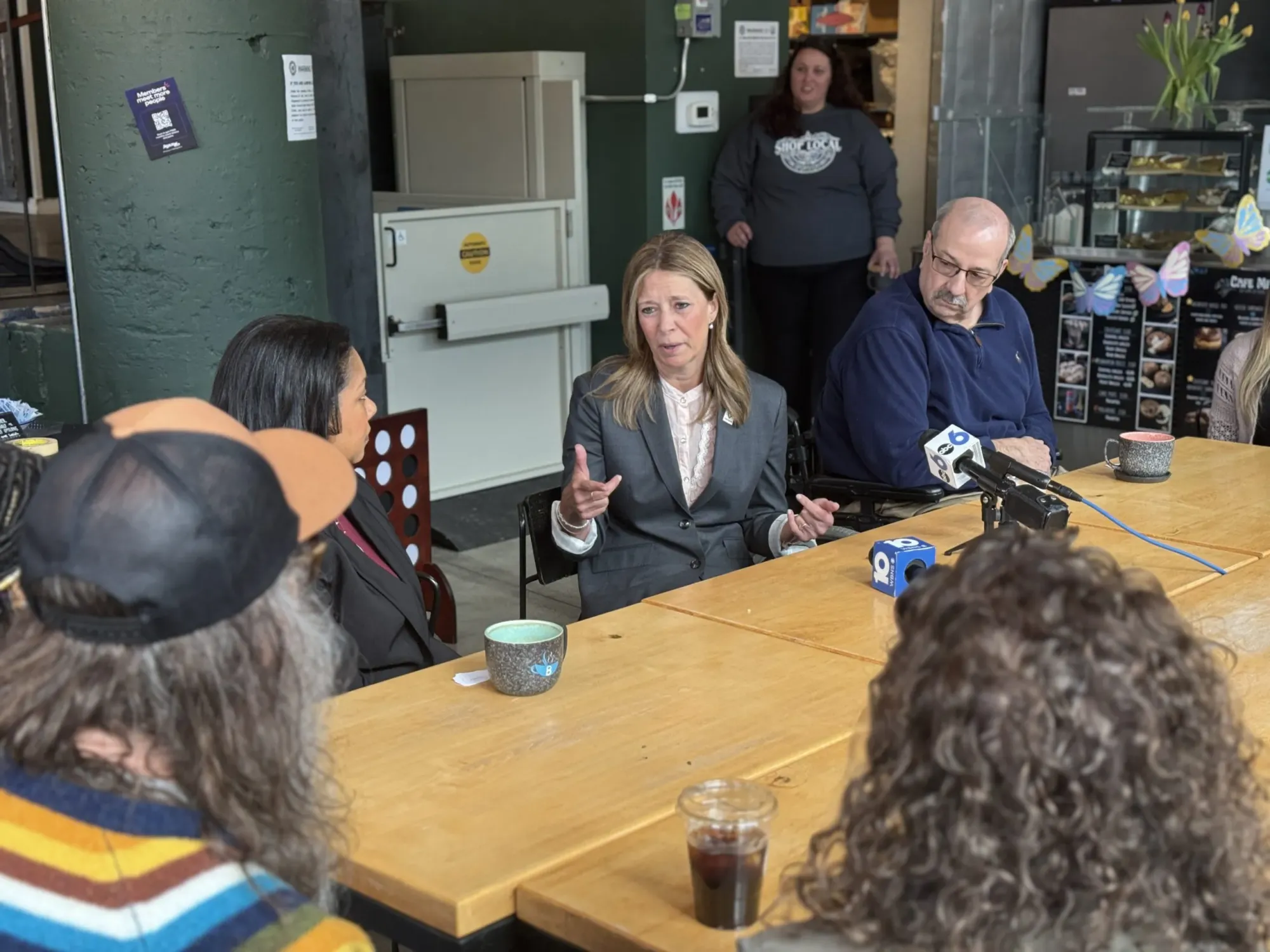
Democratic gubernatorial candidate Dr. Amy Acton made a splash on the campaign trail Monday, signaling that a return to the "gerrymandering" battle is a cornerstone of her 2026 platform.
Do you live in a food desert in Lima?

WHY LIMA’S FRESH FOOD DISAPPEARED We’ve all felt the sting at the checkout line, but for many in our community, the problem isn't just the price—it's the distance. A new interactive map reveals that "food deserts" are no longer an accident; they are a calculated business model.
The Snapshot: An urban food desert is defined as a low-income area where at least 500 people (or 33% of residents) live more than a mile from a grocery store. Dollar stores and gas stations do not count as grocery sources.
2. THE PRICE OF CONSOLIDATION It’s not just about the walk; it’s about a rigged system that keeps prices high in lower-income neighborhoods.
THE BOTTOM LINE: Food deserts aren't a natural disaster; they are the result of suspended antitrust laws. In Lima, this means that for those without reliable transportation, "food security" is currently at the mercy of corporate lobbying and distant boardrooms.
🥃 The "Ghost Podcast" & The Liquor Monopoly: What’s Going On With JobsOhio?
If you’ve ever bought a bottle of bourbon in Lima, you’ve unknowingly funded a private "jobs" machine that currently operates in total darkness. Ohio Attorney General Dave Yost is blowing the whistle on JobsOhio, and here is why you should care.
The Bottom Line: Transparency isn't just a buzzword; it’s the difference between your tax (and liquor) dollars funding local Lima growth or a $60k podcast for the well-connected.
For more on this, check out the full report at the Ohio Capital Journal.
The Downtown Lima, Inc. Game Show Extravaganza
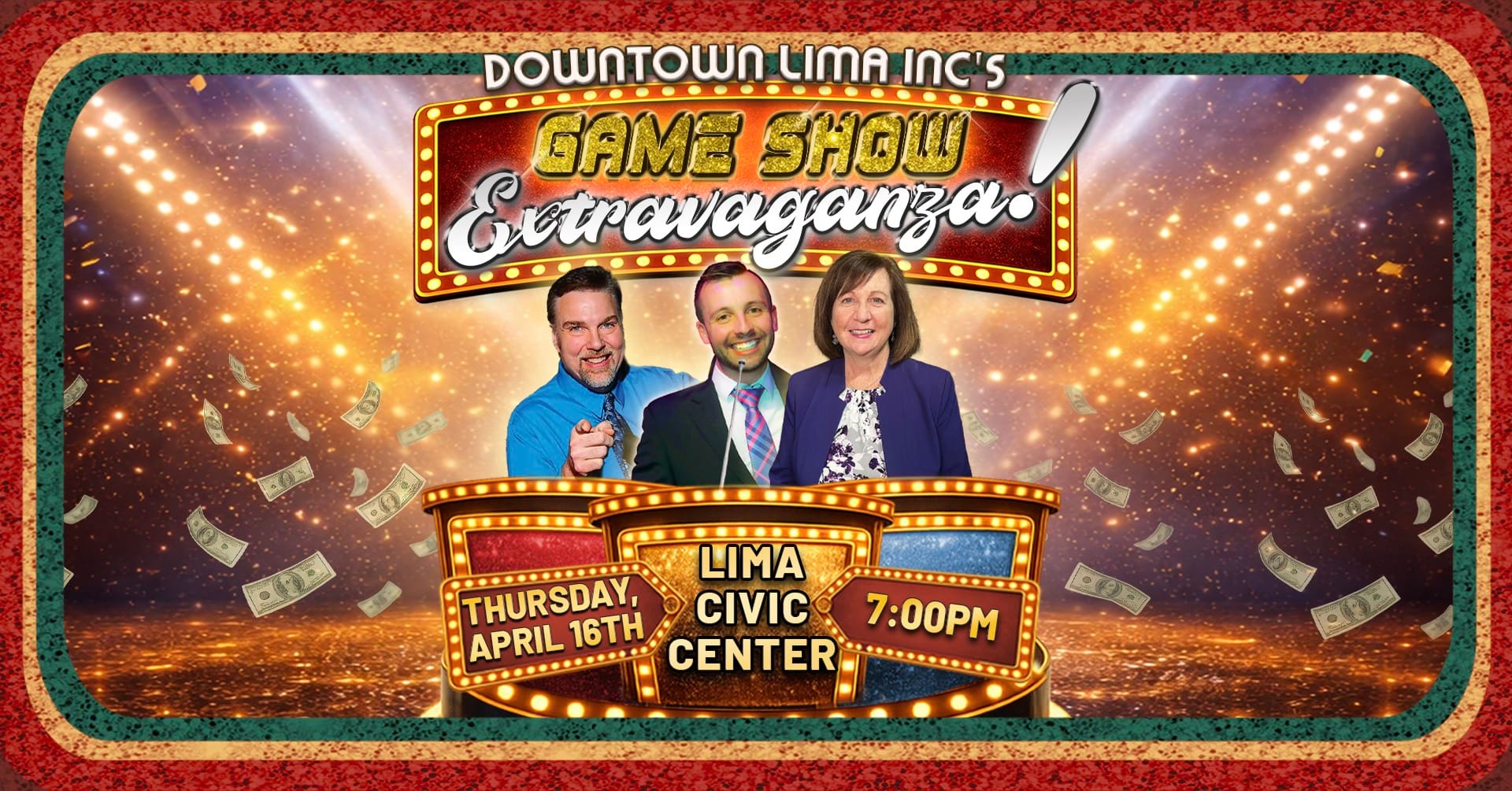
We’re turning the Civic Center into a live soundstage with all your favorites: ✨ The Right Price ✨ Fortune’s Wheel ✨ DTL Feud ✨ The Big Wheel
The Best Part? You aren’t just watching—you might be on stage! Contestants are pulled right from the audience all night long for a chance at CASH PRIZES, Downtown experiences, and massive giveaways. 💰🎁
🕺 DRESS CODE: Think 70s/80s retro game show realness. Sequins, bold patterns, and vintage flair are the vibe.
🗓 Thursday, April 16, 2026 📍 Veterans Memorial Civic Center – Convention Hall 🕕 Doors open at 6:00 PM | Games start at 7:00 PM 🍹 Cash bar & snacks available
🎟 TICKETS: Must be purchased in advance! Every ticket supports the growth and strength of our downtown district.
Don't just hear about the winning moments the next day—be in the room when the lights come on!
🔗 Grab your spot now:visitdowntownlima.com/gameshow
#DowntownLima #LimaOhio #419Events #GameShowExtravaganza #SupportLocal #VisitDowntownLima #BlackExcellence #CommunityVibes #ComeOnDown
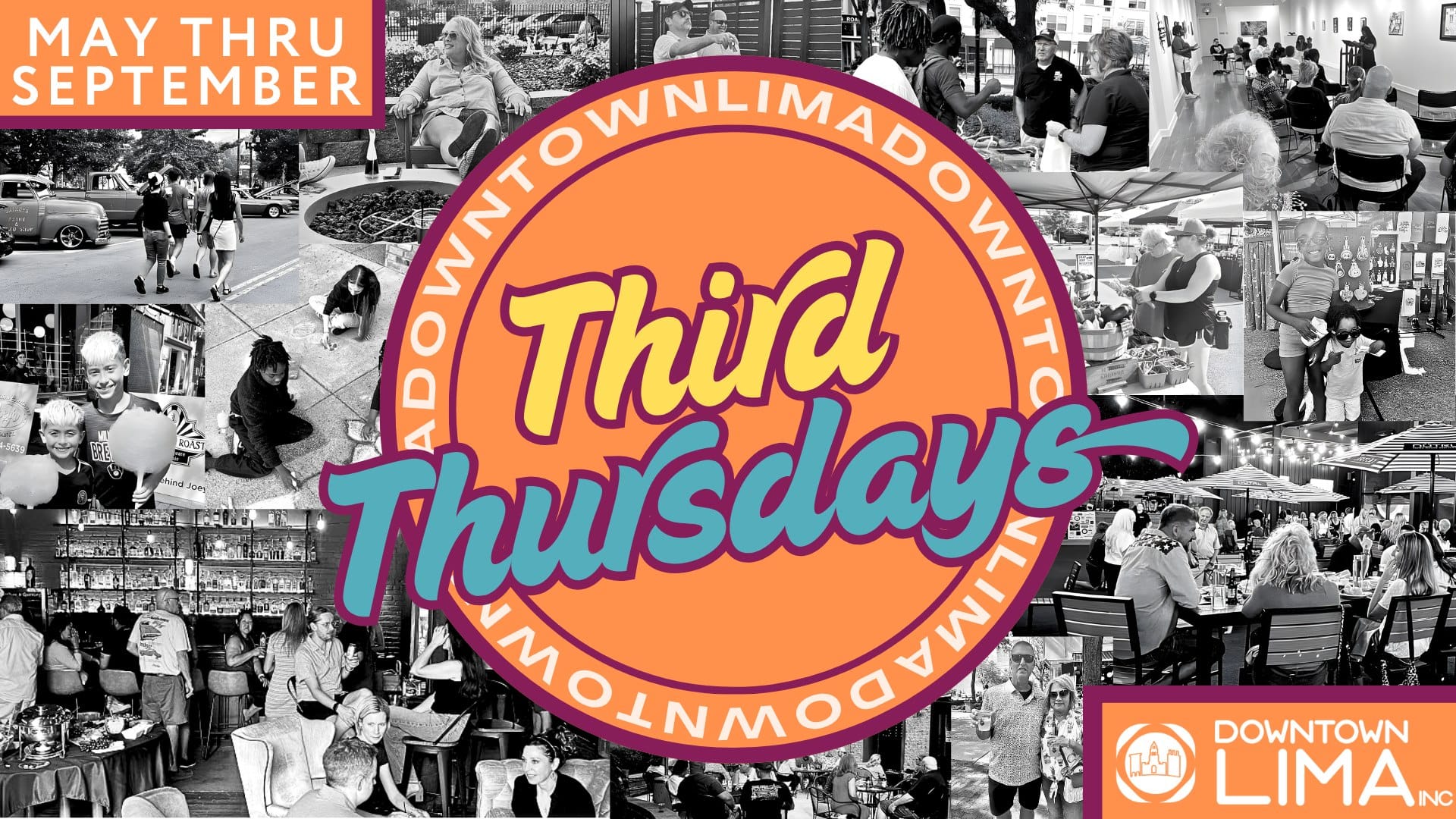
Get ready because Third Thursdays are back and bigger than ever!
Op-Ed: The Longevity Myth: Why Lima Needs Food, Not Just More Pills
In the neighborhoods of Lima—from the blocks surrounding St. Rita’s to the South Side—the most reliable sign of "healthcare" isn’t a community garden; it’s the neon "Open" sign of a pharmacy. We are told that we are winning the battle for public health because Lima residents are living longer. But for many in our low-income corridors, "living longer" has become a euphemism for "medicated survival."
We are over-prescribing our way out of a crisis that pills alone cannot solve. In Allen County, where roughly 77% of adults are overweight or obese and nearly one-third of our youth struggle with weight-related issues, we have defaulted to a healthcare model that treats the symptoms of poverty while ignoring the source: the plate.
For a resident in a Lima "food desert," where a gallon of milk or a bag of fresh spinach requires a bus ride or a mile-long trek, the path of least resistance is the pharmacy counter. Our current system makes it easier to get a 30-day supply of Metformin or Lisinopril than it is to access a head of broccoli.
This is the "Prescription Trap." We are masking the biological signals of a broken food system with a pharmaceutical veil. While these drugs are life-saving tools, they are often used as a substitute for nutrition because insurance will pay for the chemical, but not the cabbage. The result is a population that is "stable" on paper but lacks the vitality that defines true health.
The solution isn't just a lifestyle change; it’s an economic transformation. The March 2026 Rockefeller Foundation report, From Farm to FIM, provides a roadmap that feels specifically designed for a state like Ohio.
The report reveals that "Food is Medicine" (FIM) programs—where doctors prescribe medically tailored meals and fresh produce—could unlock $257 million in potential revenue for Ohio farmers and support over 16,000 new jobs across the state.
For Lima, this is the missing link. We are surrounded by some of the most fertile farmland in the world, yet our local tables are often empty of that bounty. By integrating "produce prescriptions" into our local healthcare systems, we create a "virtuous cycle":
We must challenge the narrative that living longer on a cocktail of drugs is a victory. There is a profound difference between lifespan and healthspan. A life extended by medication but diminished by chronic fatigue, mobility issues, and the side effects of a dozen pills is not the "Ohio Dream."
True health in Lima should look like a senior walking through Faurot Park without a heavy burden of diet-related inflammation, or a child on the South Side having the same access to nutrient-dense fuel as a child in Shawnee.
It is time for Ohio's policymakers and hospital systems to treat the grocery store with the same clinical rigor as the operating room. We need to bridge the gap between our rural producers and our urban patients.
We have the soil. We have the science. Now, we need the will to stop medicating the symptoms of a hungry community and start feeding the cure. Let’s turn our "prescriptions" toward the fields of Allen County.
Former Vice President Kamala Harris and U.S. Sen. Cory Booker (D-N.J.) will speak April 18 at the Michigan Democratic Party convention at Huntington Place. (Michigan Chronicle)
Breaking: Offset Hospitalized Following Florida Shooting

Migos rapper Offset is reportedly receiving medical treatment after being shot in Florida. Details remain fluid as local law enforcement and the artist's team begin to release preliminary information.
Report: 365,000 Ohioans Will Lose Health Coverage Due to Trump

< Healthcare access in Ohio is facing a massive "red tape" test. New requirements under the One Big Beautiful Bill Act are set to take effect January 1, and the projected fallout for our community is significant.
1 The "Paperwork" Penalty
While the new law aims to "break the cycle of dependency," an Urban Institute analysis shows that the primary cause of lost coverage won't be a lack of work—it will be the administrative burden of proving it.
2 Why it matters for the 419
In cities like Lima, where small business owners and caregivers form the backbone of the economy, these cuts hit home.